Univ.-Prof. Dr. Markus Heinrichs
Dekan der Wirtschafts- und Verhaltenswissenschaftlichen Fakultät (Link)
Lehrstuhl für Biologische Psychologie, Klinische Psychologie und Psychotherapie (Link)
Leiter der Ambulanz für Erwachsene II und Mitglied des Direktoriums des Psychotherapiezentrums (Link)
Leiter der "Psychotherapeutischen Hochschulambulanz für stressbedingte Erkrankungen" (Link)
Leiter der Forschungsgruppe "Social Neuroscience", Freiburg Brain Imaging Center (FBI), Neurozentrum, Universitätsklinikum (Link)
Senator der Albert-Ludwigs-Universität Freiburg (Link)
| Adresse: | Institut für Psychologie Lehrstuhl Biologische Psychologie, Klinische Psychologie und Psychotherapie Albert-Ludwigs-Universität Freiburg Stefan-Meier-Straße 8 D-79104 Freiburg i. Br. | |
| Büro: | 3. OG, Raum 03-006 (Anmeldung: Raum 03-007) | |
| Telefon: | +49-(0)761-203-3029 (Sekretariat) +49-(0)761-203-97720 (Ambulanz) +49-(0)761-203-3024 (Durchwahl) | |
| Fax: | +49-(0)761-203-3023 | |
| E-Mail: | heinrichs@psychologie.uni-freiburg.de | |
| Sprechstunden: | Studium: Mi., 13:00 – 14:30 Uhr Ambulanz: nach Vereinbarung (Voranmeldung jeweils über Sekretariat) |
Forschungs- und Arbeitsschwerpunkte
- Psychobiologische Grundlagen sozialer Interaktion
- Stress- und angstprotektive Faktoren (v.a. Oxytocin, soziale Unterstützung, Partnerschaft, Bindung)
- Diagnostik, Prävention und Therapie bei Stress und stressbedingten Erkrankungen
- Ätiologie-, Pathogenese- und experimentelle Therapieforschung bei psychischen Störungen mit sozialen Defiziten (u.a. soziale Phobie, Persönlichkeitsstörungen, Autismus)
- Psychotraumatologie und Notfallpsychologie
Ausgewählte Publikationen
2014: Auszeichnung "Highly Cited Researcher" (Analyse der 1% meistzitierten wissenschaftlichen Publikationen in den Naturwissenschaften, Sozialwissenschaften und der Medizin des letzten Jahrzehnts) als einer der weltweit meistzitierten Wissenschaftler und Aufnahme in die Liste "The World’s Most Influential Scientific Minds" (Pressemitteilung der Universität Freiburg und Pressemitteilung der Deutschen Gesellschaft für Psychologie)
Oxytocin erhöht Vertrauen | Kosfeld, M.*, Heinrichs, M.*, Zak, P., Fischbacher, U. & Fehr, E. (2005). Oxytocin increases trust in humans. Nature, 435, 673-676. (* shared first authorship) |
Riskofaktoren für posttraumatische Belastungsstörung |
Heinrichs, M., Wagner, D., Schoch, W., Soravia, L. M., Hellhammer, D. H. & Ehlert, U. (2005). Predicting posttraumatic stress symptoms from pretraumatic risk factors: A 2-year prospective follow-up study in firefighters. American Journal of Psychiatry, 162, 2276-2286. |
Cortison reduziert Angst |
Soravia, L. M., Heinrichs, M., Aerni, A., Maroni, C., Schelling, G., Ehlert, U., Roozendaal, B. & de Quervain, D. J.-F. (2006). Glucocorticoids reduce phobic fear in humans. Proceedings of the National Academy of Sciences of the United States of America (PNAS), 103, 5585-5590. |
Oxytocin, Vertrauen |
Baumgartner, T., Heinrichs, M., Vonlanthen, A., Fischbacher, U. & Fehr, E. (2008). Oxytocin shapes the neural circuitry of trust and trust adaptation in humans. Neuron, 58, 639-650. |
Oxytocin, Vasopressin | Heinrichs, M., von Dawans, B. & Domes, G. (2009). Oxytocin, vasopressin, and human social behavior. Frontiers in Neuroendocrinology, 30, 548-557. |
Testosteron und Sozialverhalten | Eisenegger, C., Naef, M., Snozzi, R., Heinrichs, M. & Fehr, E. (2010). Prejudice and truth about the effect of testosterone on human bargaining behaviour. Nature, 463, 356-359. |
Neurohormone und | Meyer-Lindenberg, A., Domes, G., Kirsch., P. & Heinrichs, M. (2011). Oxytocin and vasopressin in the human brain: social neuropeptides for translational medicine. Nature Reviews Neuroscience, 12, 524-538. |
Genetik des Sozialen | Chen, F. S.*, Kumsta, R.*, von Dawans, B., Monakhov, M., Ebstein, R. P. & Heinrichs, M. (2011). Common oxytocin receptor gene (OXTR) polymorphism and social support interact to reduce stress in humans. Proceedings of the National Academy of Sciences of the United States of America (PNAS), 108, 19937-19942. (* shared first authorship) |
Testosteron und Kooperation | Eisenegger, C., Naef, M., Snozzi, R., Heinrichs, M. & Fehr, E. (2012). New evidence on testosterone and cooperation. Nature, 485, 5-6. |
Stress und Sozialverhalten | von Dawans, B., Fischbacher, U., Kirschbaum, C., Fehr, E. & Heinrichs, M. (2012). |
Oxytocin und psychobiologische Therapie
| Heinrichs, M., Chen, F. S. & Domes, G. (2012). Oxytocin. In S. G. Hofmann (Ed.), Psychobiological approaches for anxiety disorders: treatment combination strategies (pp. 123-143). Oxford: Wiley-Blackwell. |
Blickkontakt und Überzeugungskraft
| Chen, F. S., Minson, J. A., Schöne, M. & Heinrichs, M. (2013). In the eye of the beholder: eye contact increases resistance to persuasion. Psychological Science, 24, 2254-2261. |
Soziale Hormone und Gehirn
| Heinrichs, M., Chen, F. S. & Domes, G. (2013). Social neuropeptides in the human brain: oxytocin and social behavior. In S. Baron-Cohen, H. Tager-Flusberg & M. Lombardo (Eds.), Understanding other minds (3rd ed.) (pp. 291-307). Oxford: Oxyford University Press. |
Sozialer Stress und soziale Nähe
| Heinrichs, M., Chen, F. S., Domes, G. & Kumsta, R. (2013). Social stress and social approach. In J. Armony & P. Vuilleumier (Eds.), The Cambridge Handbook of Human Affective Neuroscience (pp. 509-532). Cambridge: Cambridge University Press. |
Genetik der Sensitivität für Oxytocin
| Chen, F. S., Kumsta, R., Dvorak, F., Domes, G., Yim, O.-S., Ebstein, R. P. & Heinrichs, M. (2015). Genetic modulation of oxytocin sensitivity: a pharmacogenetic approach. Translational Psychiatry, 5, e664 (1-7). |
Stressbewältigung in ärztlicher und psychotherapeutischer Behandlung
|
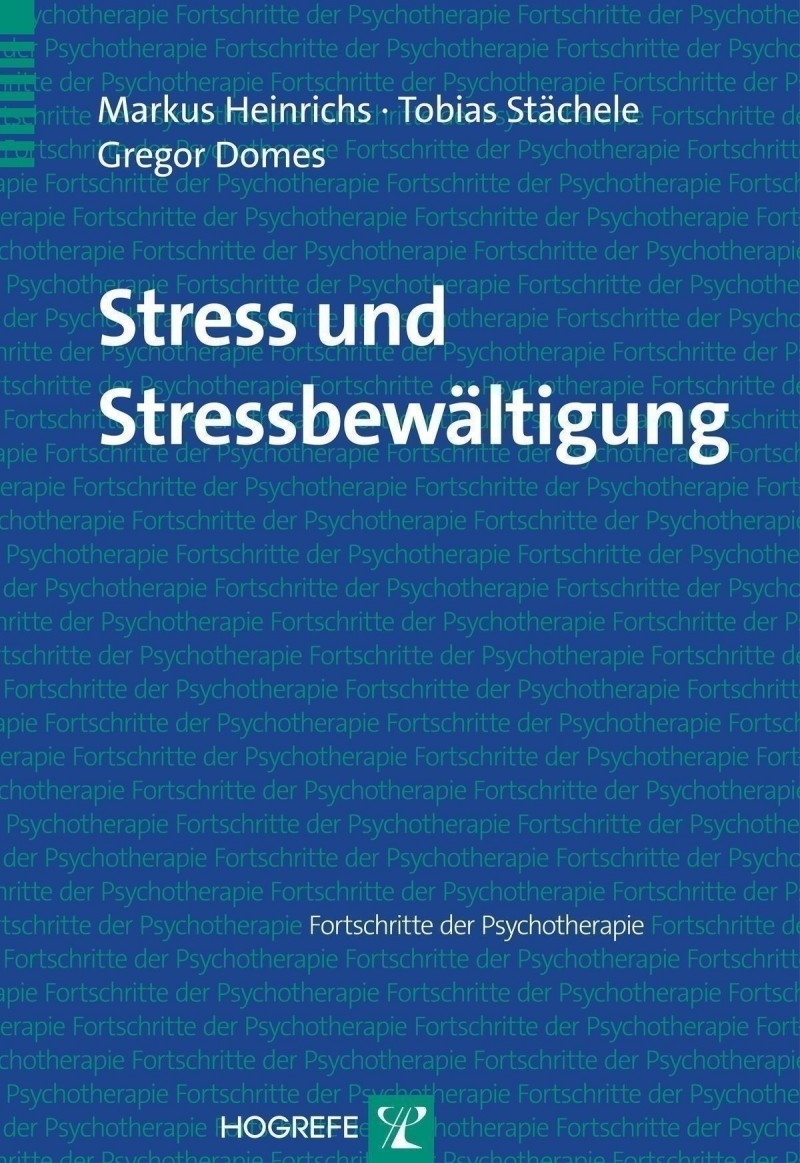
Heinrichs, M., Stächele, T. & Domes, G. (2015). Stress und Stressbewältigung. Göttingen: Hogrefe. |
Neue Perspektiven der Schizophrenietherapie
| Millan, M. J., Andrieux, A., Bartzokis, G., Cadenhead, K., Dazzan, P., Fusar-Poli, P., Gallinat, J., Giedd, J., Grayson, D. R., Heinrichs, M., Kahn, R., Krebs, M. O., Leboyer, M., Lewis, D., Marin, O., Marin, P., Meyer-Lindenberg, A., McGorry, P., McGuire, P., Owen, M. J., Patterson, P., Sawa, A., Spedding, M., Uhlhaas, P., Vaccarino, F., Wahlestedt, C. & Weinberger, D. (2016). Altering the course of schizophrenia: progress and perspectives. Nature Reviews Drug Discovery, 15, 485-515. |
Leitfaden
| Labuschagne, I., Grace, C., Rendell, P., Terrett, G. & Heinrichs, M. (2019). An introductory guide to conducting the Trier Social Stress Test. Neuroscience & Biobehavioral Reviews, 107, 686-695. |
Oxytocin, Empathie und
| Domes, G., Ower, N., von Dawans, B., Spengler, F. B., Dziobek, I., Bohus, M., Matthies, S., Philipsen, A. & Heinrichs, M. (2019). Effects of intranasal oxytocin administration on empathy and approach motivation in women with borderline personality disorder: a randomized trial. Translational Psychiatry, 9, 328 (1-9). |
Oxytocin und | Schiller, B., Koenig, T. & Heinrichs, M. (2019). Oxytocin modulates the temporal dynamics of resting EEG networks. Scientific Reports, 9, 13418 (1-9). |
Stressbewältigung für
| Stächele, T., Heinrichs, M. & Domes, G. (2020). Ratgeber Stress und Stressbewältigung. Göttingen: Hogrefe. |
Biologische Grundlagen | Kirschbaum, C., Domschke, K. & Heinrichs, M. (2020). Biopsychologische Grundlagen. In J. Hoyer & S. Knappe (Hrsg.), Klinische Psychologie und Psychotherapie, (3. Aufl.) (S. 213-243). Berlin: Springer. |
Selbstkontrolle und Stabilität
| Kleinert, T., Nash, K., Leota, J., Koenig, T., Heinrichs, M. & Schiller, B. (2022). A self-controlled mind is reflected by stable mental processing. Psychological Science, 33, 2123-2137. |
Emotionserkennung über | Lott, L. L., Spengler, F. B., Stächele, T., Schiller, B. & Heinrichs, M. (2022). EmBody/EmFace as a new open tool to assess emotion recognition from body and face expressions. Scientific Reports, 12, 14165 (1-13). |
Prosoziale Rolle von
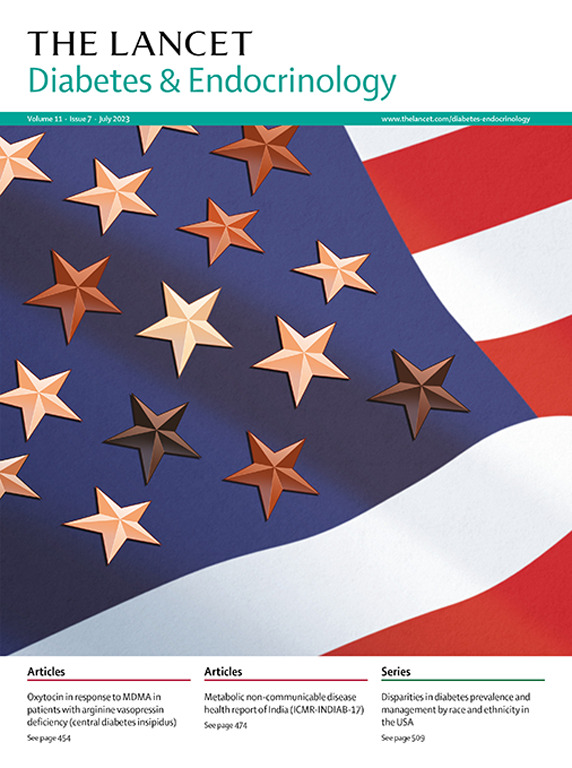
| Atila, C., Holze, F., Murugesu, R., Rommers, N., Hutter, N., Varghese, N., Sailer, C. O., Eckert, A., Heinrichs, M., Liechti, M. E. & Christ-Crain, M. (2023). Oxytocin in response to MDMA provocation test in patients with arginine vasopressin deficiency (central diabetes insipidus): a single-centre, case-control study with nested, randomised, double-blind, placebo-controlled crossover trial. The Lancet Diabetes & Endocrinology, 11, 454-464. |